Power Outage Food Spoilage: When Homeowners Insurance May Help
Check food spoilage coverage, deductibles, and outage exclusions before filing a claim, and keep generator use safe during a power failure.
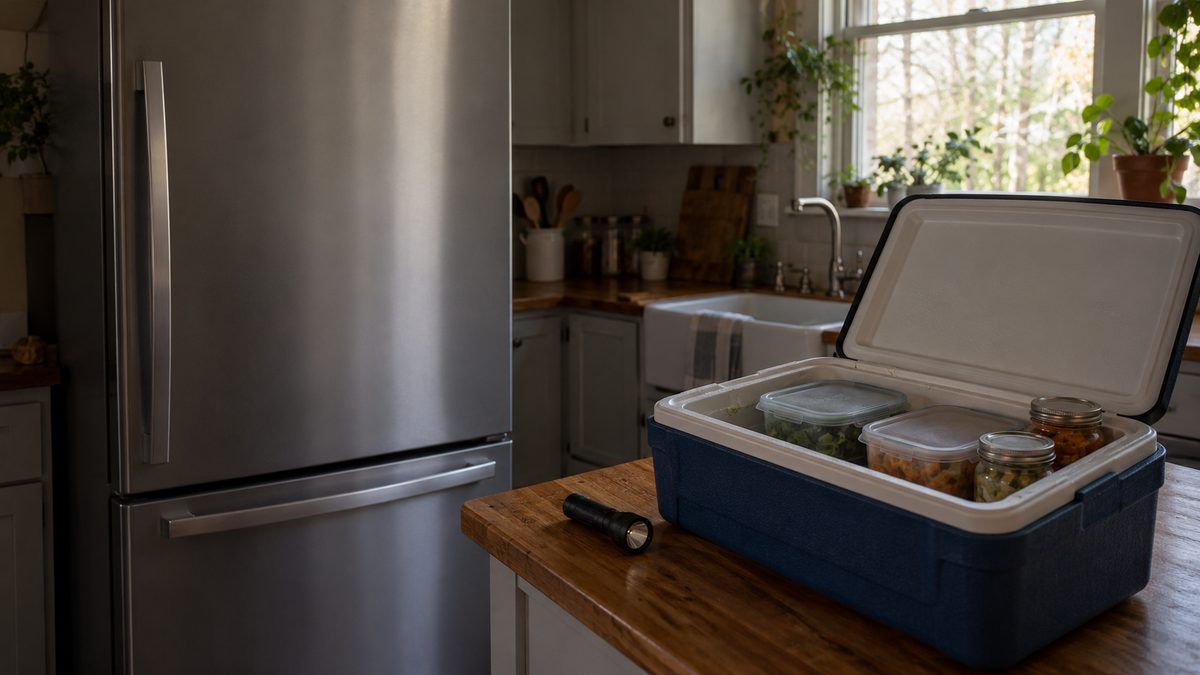
Homeowners insurance may cover food spoiled during a power outage, but coverage depends on your policy and what caused the loss. A refrigerated-food endorsement may provide different protection from the base policy. Check the outage exclusion, coverage limit, and deductible before assuming the cost of replacing groceries will be reimbursed.
During an outage, food safety and safe backup power come before the claim. You do not need to keep unsafe food in your home just to show an adjuster what was lost.
Trace the outage to the event that caused it
“The power went out” describes the interruption, but it may not answer the insurance question. A storm-damaged electrical connection at your property, a failure elsewhere on the utility system, and a broken refrigerator can receive different treatment under a policy.
Start with what you know. Note when the power failed and returned, whether neighbors were affected, and any explanation the utility provided. Save outage notifications and photographs of visible damage taken from a safe location. Do not inspect downed wires, damaged electrical equipment, or flooded areas to collect evidence.
Then ask the insurer which policy provision applies to the cause. Some policies restrict losses from power failures that originate away from the residence. Coverage for a damaged building does not automatically mean that every related expense is covered too.
If wind damaged the home, keep the building claim and food-loss questions connected but distinct. Home insurance and wind damage explains why the type of damage and applicable deductible both matter. An outage can accompany several losses without giving them identical coverage.
Look beyond the declarations page for food coverage
Your declarations page lists coverage amounts and endorsements, but you may need the full forms to understand refrigeration losses. Search for language about refrigerated property, food spoilage, power interruption, utility services, and equipment breakdown. A helpful label on the policy summary still needs to be read alongside its conditions.
Ask for the actual endorsement if the insurer says you have a food benefit. Confirm what events trigger it, whether off-premises power failure is included, and whether appliance failure is treated differently. Also ask how the policy values the food and what documentation it requires.
Use this worksheet during the call:
| Policy question | What to write down |
|---|---|
| Is this cause of spoilage covered? | The relevant policy form and explanation |
| Does failure away from my property qualify? | Any power-failure exclusion or exception |
| Is there a separate food limit? | The limit that applies to this loss |
| Which deductible applies? | Any special food deductible or waiver |
| What evidence is needed? | Inventory, photos, receipts, or outage records |
| How do I report the loss? | Required steps, timing, and contact details |
Get unclear answers in writing where possible. If the claim is denied, request the reason and the policy language used. Consumer resources at the National Association of Insurance Commissioners can help you find your state insurance department when you need help understanding a coverage dispute.
Common gaps can leave the grocery bill with you
Off-premises power interruption is a common coverage issue. So is appliance wear or mechanical breakdown when the policy lacks an applicable endorsement. A covered storm outside the house does not remove every exclusion inside the contract.
Planned utility interruptions and refrigerator problems unrelated to a covered event also deserve a specific question. Do not assume that all situations described as an outage count as the same insured event. Policies can differ even for neighboring households.
Flood-related losses present another concern. Standard homeowners policies generally exclude flood damage, and buying a separate flood policy does not mean all spoiled food will be reimbursed. Ask about the particular property and cause of loss under each contract. The home insurance water-damage overview explains why distinguishing sources of water matters.
Coverage changes made after an outage will not insure that earlier loss. If you discover a gap, use it to review future protection after handling the immediate safety and replacement needs.
Compare the eligible loss with the deductible
Make a reasonable inventory rather than guessing a large round total. List the discarded items, approximate quantities, and supported replacement costs. Use receipts or purchase history when available. Mark estimates as estimates, especially when only part of a package remained.
Compare the potentially covered amount with the deductible and any special limit. A loss below the applicable deductible may produce no payment. A separate food benefit could work differently, so ask instead of applying the dwelling deductible automatically.
Ask how an inquiry is recorded and what opens a formal claim. You need clear coverage information to make a decision, but you should not assume every conversation has the same administrative effect. If the outage caused other damage, tell the insurer about it so the claim can be assessed as a whole.
Do not claim the original purchase cost of an entire freezer's contents without accounting for what was present and lost. Accurate records support a fair assessment and help you budget for the groceries you need first.
Protect food without using taste as a test
Keep refrigerator and freezer doors closed as much as possible while the power is out. Repeatedly opening them to check the contents lets cold air escape. Use appliance thermometers if available and record useful observations without prolonged door opening.
Do not taste food to decide whether it is safe. Smell and appearance cannot reliably establish safety either. The safe holding period depends on the food, temperature, and storage conditions. Use current federal food-safety guidance or ask your local health department about uncertain items, especially food for someone at higher risk of serious illness.
If you cannot establish that a perishable item stayed safe, do not keep it solely to avoid a financial loss. Photograph it, note the reason for disposal, and discard it according to local guidance. Keep a separate record of replacement purchases rather than mixing them into the original loss inventory.
A generator needs an outdoor plan before the outage
Fuel-burning generators produce carbon monoxide, which can be deadly. Operate them outdoors, well away from doors, windows, vents, and other openings. Never run one in a home, garage, basement, or enclosed porch, even with a door open. Follow the manufacturer's placement and operating instructions and official local fire-safety guidance.
Keep exhaust directed away from the home and neighboring buildings. Maintain working carbon monoxide alarms as instructed. If an alarm sounds or someone develops symptoms that could indicate exposure, move outside to fresh air and seek emergency help immediately.
Do not plug a generator into a wall outlet to power the house. Improper connections can send electricity into utility lines and endanger workers and others. Have a qualified electrician arrange any connection to household wiring with appropriate equipment. Use suitable cords as directed, keep equipment dry, and shut the generator down and let it cool before refueling.
If you do not have a safe operating location, choose another plan. The possibility of saving food does not justify unsafe backup power.
Replace essentials and keep the claim record together
After power returns, confirm appliances are working and follow food-safety guidance before restocking. Save the inventory, outage messages, photos, insurer correspondence, and receipts in one folder. Note any temporary repairs or professional inspection without discarding damaged equipment before discussing documentation with the insurer, unless safety requires action.
Use winter storm financial preparation to plan for replacement groceries and other costs that may arrive before reimbursement. If you rent, review what renters insurance covers and ask your own insurer about food losses.
This is general information, not personal insurance or safety advice. Check your policy with a licensed insurance professional and use official food-safety and generator instructions for your situation.
Frequently asked
Could renters insurance cover spoiled food?
It may, depending on the renters policy and cause of loss. Check personal property coverage and any refrigerated-food endorsement. The landlord's building insurance generally does not insure your groceries.
Can I claim food kept in a separate garage freezer?
Ask whether the coverage applies to that appliance and location. Provide the freezer location, outage details, and contents inventory. Do not assume that every storage location receives identical treatment.
Will insurance pay for restaurant meals during an outage?
Food spoilage coverage does not automatically cover meals away from home. Additional living expense coverage has separate conditions, often linked to a covered loss making the home uninhabitable. Ask before relying on reimbursement.
Should I keep spoiled food until an adjuster visits?
Do not keep unsafe food solely for a claim. Photograph and list it if you can do so safely, then follow disposal guidance. Ask the insurer what alternative documentation it accepts.
Can the utility reimburse me if my policy does not?
Ask the utility about its loss-claim process and eligibility rules. Payment is not guaranteed. Keep outage records and receipts, and disclose any reimbursement to the insurer so the same loss is not paid twice.
Sources
Keep reading
Auto & Home Insurance Does Home Insurance Cover Wind Damage? Check the Deductible First
Understand wind damage coverage, separate storm deductibles, roof claims, and the evidence to gather before repairs begin.
October 25, 20265 min read
Auto & Home Insurance Does Homeowners Insurance Cover Water Damage?
Sudden and accidental is covered, gradual and ground-level is not. How insurers categorise water losses, and which endorsements close the gaps.
October 15, 20267 min read
Credit & Debt How to Prepare Your Finances for Winter Storms
Build a winter storm cash plan, secure household documents, review insurance gaps, and ask utilities about payment options before bills become overdue.
October 26, 20266 min read
Auto & Home Insurance Daylight Saving Time Ends: Driving Risks and Animal Collision Coverage
Prepare for darker commutes and learn how comprehensive and collision coverage can apply when an animal is involved.
October 26, 20266 min read