How to Prepare Your Finances for Winter Storms
Build a winter storm cash plan, secure household documents, review insurance gaps, and ask utilities about payment options before bills become overdue.
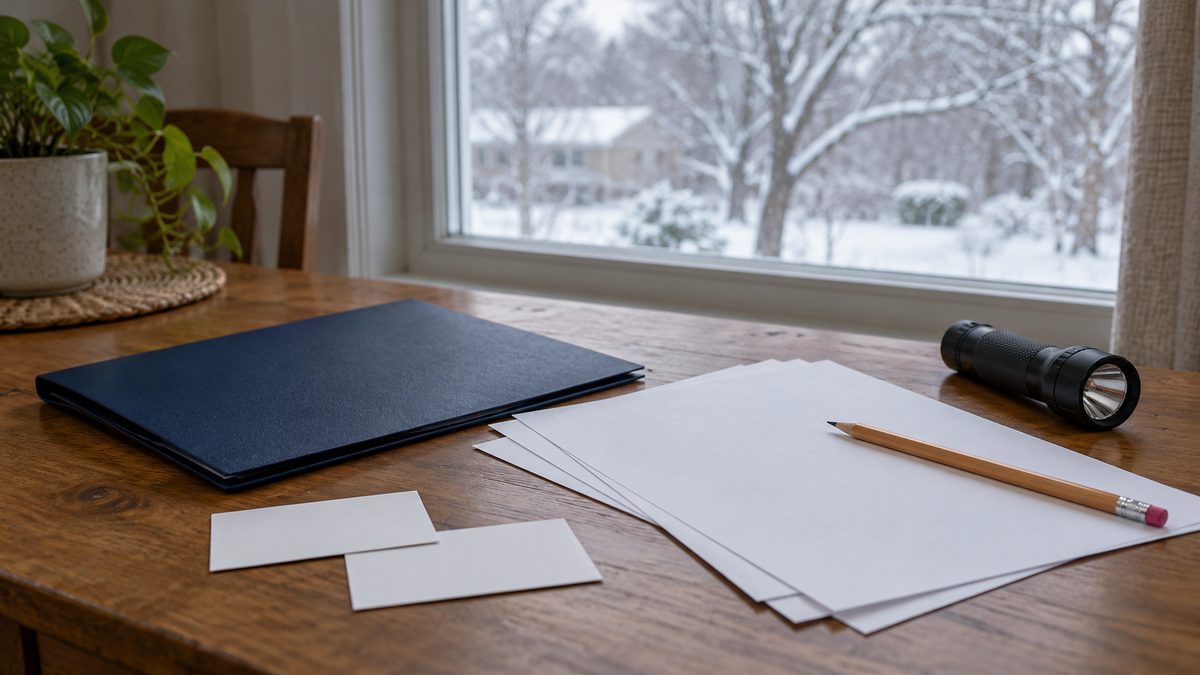
Prepare your finances for winter storms by setting aside accessible money, saving essential records, reviewing insurance gaps, and arranging a plan for utility bills. Start with the expenses your household would face before work, power, and normal services return. Insurance or assistance may help later, but an expected reimbursement is not cash you can spend today.
A useful plan covers both extra spending and interrupted income. Replacing groceries is one problem; replacing groceries while missing paid shifts and still owing rent is a different budget decision.
Build the storm budget around your household's weak points
List the situations that could interrupt your household's routine. A driver may lose work when roads close. Someone working from home may lose income without power or internet. A household member who depends on powered medical equipment needs a practical backup plan developed with their care team, along with money for any related travel or accommodation.
Separate costs that continue from costs caused by the storm. Housing payments, debt payments, and insurance premiums may still fall due. Extra spending could include transportation, replacement food, temporary lodging, or urgent repairs. Do not count on the same pot of money to cover each expense in full.
Use your own bills and local quotes where useful rather than a national average. You are estimating the cash your household needs, not predicting the exact cost of a future storm.
| Budget item | What to check now | What could reduce the pressure |
|---|---|---|
| Essential bills | Amounts, due dates, and payment methods | A calendar and early calls about payment options |
| Lost income | Employer closure and leave policies | A reserve for a delayed or smaller paycheck |
| Temporary lodging | Accessible places you could stay | An agreed plan with relatives or other safe accommodation |
| Food and transport | What you would need if normal services stopped | A planned essentials list and available funds |
| Insurance share | Deductibles and uncovered expenses | Savings you can access before reimbursement |
| Utility charges | Current balance and seasonal billing terms | An affordable payment arrangement if available |
Decide which costs need cash immediately and which can wait. That order helps you avoid buying optional equipment while leaving the next housing payment unfunded.
Give emergency savings a job before choosing an amount
There is no single storm-fund target that suits every household. Start with the most likely urgent expense you could not cover from the next paycheck. Then build toward a reserve that also supports essential bills during an interruption to earnings.
Keep this money accessible and separate enough from everyday spending that it is not easily used by accident. Avoid putting money you may need suddenly into an investment that can lose value or an account with access restrictions you do not understand. Check account fees, withdrawal arrangements, and any applicable deposit protection with the institution.
If the budget is tight, start with a manageable transfer after payday and adjust it when income allows. A small reserve still gives you more options than a plan that requires a large deposit you cannot make. Use how much to keep in an emergency fund to consider broader household risks beyond winter weather.
Review near-term discretionary spending as well. A holiday spending budget can help you see commitments competing for the same money. Avoid funding seasonal purchases with money already assigned to essential storm needs.
Keep payment access from depending on one device
A power or communications failure can interrupt access to online accounts and card terminals. Consider a modest amount of securely stored cash appropriate to your situation, while recognizing the loss and theft risks. Keep it separate from the larger savings reserve rather than withdrawing all your emergency money.
Record your bank's contact information and know another way to reach it if the app is unavailable. Keep devices charged when a storm is forecast and make sure a trusted household member knows where the emergency contact list is stored.
Check upcoming automatic payments. A scheduled debit can still leave the account even if a paycheck is delayed. Do not cancel payments blindly; compare the available balance with expected deposits and call the biller when a shortfall appears likely. Ask how any agreed change affects fees, interest, and account status.
Never assume an announced service disruption automatically changes your payment deadline. Get any arrangement confirmed and retain the confirmation.
Store the records needed to prove a loss
Keep copies of insurance policies, declarations pages, claim contacts, identification, and key financial contact details somewhere you can access if you leave home. Include lease or mortgage information and a record of essential bills. Protect full account numbers and identity documents rather than leaving them in an open folder on a shared device.
Use secure digital copies and a protected offline option for the essentials. Check that the files open without an internet connection and that the person who may need them has authorized access. A backup that requires a forgotten password or a code sent to a dead phone may be unusable at the wrong time.
Photograph belongings and the condition of your home before a storm, when it is safe. Save receipts for significant purchases and note model details where practical. After a loss, record damage safely and keep receipts for necessary expenses. Those records can support an assessment without guaranteeing that the policy covers every item.
Read insurance for the costs you would have to carry
Review home or renters coverage, auto coverage, deductibles, exclusions, and claim procedures. Ask about additional living expenses if a covered loss makes the home uninhabitable. A general power outage or an evacuation does not by itself guarantee lodging reimbursement under every policy.
Check how your policy treats freezing, water damage, and duties to protect the property. Coverage can depend on the cause and the steps reasonably taken to maintain heat or protect plumbing. Frozen pipes and home insurance provides context for the questions to ask your insurer.
Flood and other excluded causes need separate attention. Do not buy coverage on the assumption that it will take effect immediately or apply retroactively. Ask about effective dates, waiting periods, and the particular risks at your address before relying on a change.
Also review smaller losses that can strain cash flow. Food spoilage during a power outage explains why a special limit, deductible, or power-failure exclusion may matter. Use the National Association of Insurance Commissioners to find insurance consumer resources and your state regulator when needed.
Call the utility while there is time to compare options
If winter bills already look difficult, contact the utility before a missed payment. Ask about budget billing, installment arrangements, hardship programs, and referrals to official energy-assistance programs. Availability and eligibility vary, so confirm current terms directly.
Budget billing generally spreads charges rather than reducing the total cost of energy. Ask how the utility recalculates payments, handles an existing overdue balance, and settles any difference between estimated payments and actual use. A lower initial payment can still leave a later adjustment.
Before accepting an arrangement, get answers to these questions:
- What payment is due now, and what follows?
- Are there fees or other charges?
- Does the arrangement address past-due amounts as well as new usage?
- What happens if my income changes or I miss an installment?
- Do any local protections apply, and what application or documentation is required?
Shutoff protections are not uniform, and a seasonal restriction does not generally erase the underlying bill. Confirm the rules with the utility and the relevant official state or local source. The Consumer Financial Protection Bureau offers consumer resources for managing bills and financial difficulties.
Recheck the plan when a forecast becomes a warning
When a storm is approaching, review balances, bills due soon, essential supplies, and the household contact plan. Avoid unnecessary trips just to complete a financial task. Download missing records while service is available and confirm any safe place you might need to stay.
Afterward, list what you spent, which payments need attention, and which claims or assistance applications remain unresolved. Rebuild the reserve gradually. If a shortfall persists, contact creditors and a qualified financial counselor before adding expensive debt you cannot repay.
This article is general financial and insurance information, not personal financial, legal, or insurance advice. Check policy terms and local program rules with the responsible provider or a qualified professional.
Frequently asked
Should I pause debt payments to build a storm fund?
Do not assume a storm cancels required payments. Review essentials and payment obligations together, and contact creditors if you expect a shortfall. A qualified nonprofit credit counselor can help assess competing bills and borrowing costs.
Is a credit card enough for a winter emergency?
A card can be a backup but depends on available credit, working payment systems, and your ability to repay. Interest and fees can extend the cost of the storm. Keep an accessible savings plan as well.
Will a utility budget plan erase an overdue balance?
Usually a budget plan changes how bills are spread across payments rather than forgiving charges. Ask how existing arrears, actual usage, and later adjustments will be handled before agreeing.
Can I assume disaster assistance will cover my losses?
No. Programs depend on the event, location, eligibility, and current terms. Verify assistance through official government or utility channels and treat any unconfirmed payment as uncertain when planning cash needs.
How can an older relative access emergency records safely?
Arrange a secure, simple method in advance and identify a trusted contact with permission to help. Do not circulate passwords or full account numbers in a shared household message. Ask institutions about formal authorized access where needed.
Sources
Keep reading
Auto & Home Insurance Frozen Pipes and Home Insurance: Coverage, Care, and Claims
Understand typical burst-pipe coverage, reasonable-care conditions, prevention steps, and the records to keep after winter water damage.
October 22, 20265 min read
Auto & Home Insurance Power Outage Food Spoilage: When Homeowners Insurance May Help
Check food spoilage coverage, deductibles, and outage exclusions before filing a claim, and keep generator use safe during a power failure.
October 26, 20266 min read
Credit & Debt A Holiday Spending Budget That Does Not Follow You Into January
Build a holiday budget from available cash, include overlooked costs, and use a worked example to keep gifts from becoming January debt.
October 22, 20265 min read
Credit & Debt How to Avoid Ticket Scams Before a Big Game or Concert
Check ticket sellers, transfer methods, payment protections, and refund terms before paying for a high-demand game or concert.
October 25, 20266 min read