Renters Insurance While Traveling: What to Check Before Packing
Check how renters insurance covers belongings away from home, including theft conditions, special limits, deductibles, and claim documentation.
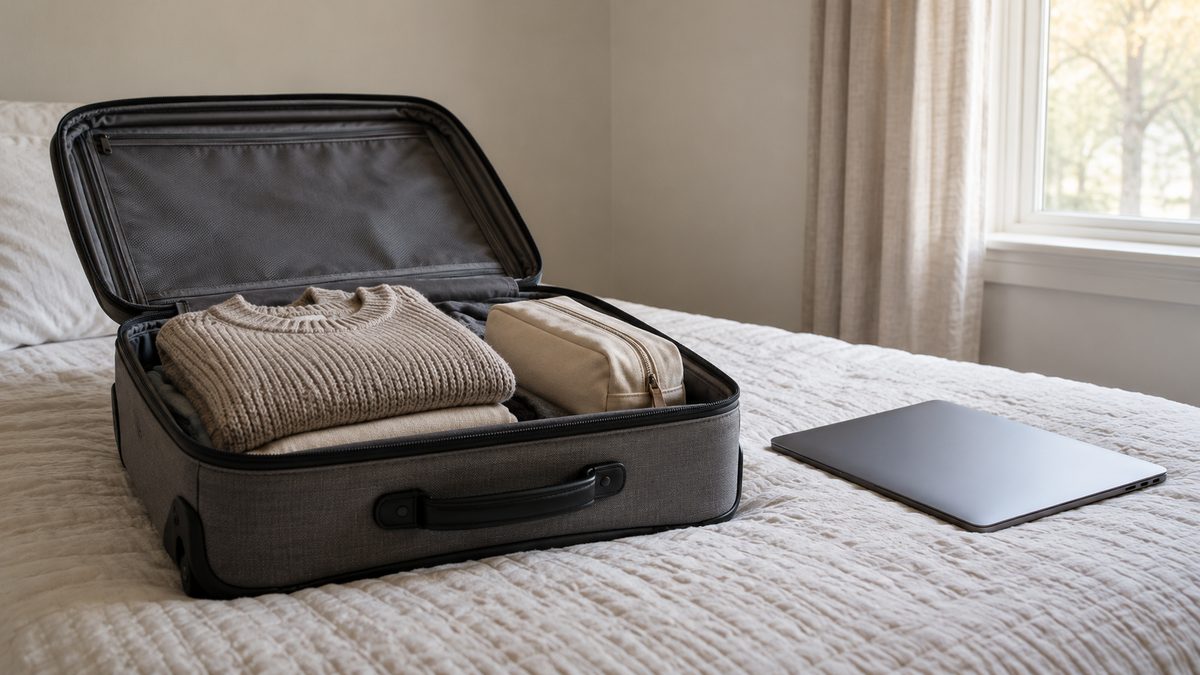
Renters insurance may cover belongings while you travel, but coverage depends on the cause of loss, policy limits, and deductible. Check the personal property and off-premises provisions before packing valuable items. A suitcase outside your apartment is not automatically uninsured, but a travel mishap is not automatically a covered claim either.
Holiday travel adds places where possessions can be left unattended: a relative's guest room, a parked car, or baggage handling. Review the situations you expect to face instead of relying on a broad promise that your policy covers your stuff anywhere.
Trace the coverage from your apartment to the trip
Start with the policy's personal property section. Look for language describing property away from the insured residence, the people whose property is covered, and any reduced limit away from home. The declarations page can summarize limits, but the contract and endorsements explain conditions.
Ask the insurer about the trip you are taking. Describe where you will stay, how long you will be away, and whether you are taking ordinary personal belongings or equipment used for work. A temporary visit and property kept at another residence can raise different questions.
Read what renters insurance covers if the distinction between personal property, liability, and additional living expenses is unclear. Those coverages solve different problems. Having liability insurance does not by itself establish coverage for a stolen bag.
Check the event, not just the missing item
Property coverage responds to specified causes and conditions under the policy. Theft and accidental damage are not interchangeable. A stolen suitcase, a phone dropped into water, and a bag you cannot locate may receive different answers.
Ask about loss, mysterious disappearance, breakage, and theft separately. If you plan to leave luggage in a vehicle, check any conditions involving unattended property and the documentation needed for a claim. Do not assume that a locked car resolves every policy condition.
Also ask which insurer would handle each part of an incident. Renters coverage may address stolen personal belongings, while damage to the vehicle is a separate auto insurance question. One event can involve more than one policy without making either policy responsible for everything.
Identify the small items with restrictive limits
Some categories of personal property can have special limits, particularly for theft. Jewelry, certain electronics, cash, and business property deserve a close reading of your own policy. The category and cause of loss matter more than the fact that an item fits inside a suitcase.
List the valuables you intend to take and ask the insurer to explain the limit for each. Record whether the limit applies per item, per category, or per loss. A broad personal property limit may be much higher than the amount available for a particular category.
If an endorsement or separate item policy is proposed, ask what events it covers, what deductible applies, and when coverage begins. Compare that cost with leaving the item safely at home. Buying extra insurance is not the only way to reduce exposure on a short trip.
| Item or situation | Policy question before departure | Practical preparation |
|---|---|---|
| Jewelry packed for a celebration | Is theft subject to a special category limit? | Keep a purchase record and consider leaving irreplaceable pieces home |
| Laptop used for paid work | Do business property restrictions apply? | Back up files and record identifying details |
| Luggage in a parked car | What conditions apply to theft from a vehicle? | Keep possessions out of view and avoid unnecessary storage there |
| Bag left at a relative's house | Does temporary off-premises coverage apply? | Note what you brought and where you stored it |
| Missing checked baggage | How does other reimbursement affect a renters claim? | Keep carrier reports and any settlement records |
Compare the deductible with the likely payment
The deductible is the portion of a covered loss you generally bear under the policy. Even an event that qualifies for coverage may produce little or no insurer payment if the covered value is near or below the applicable deductible.
Compare the deductible with the value and settlement terms for the belongings you are taking. Account for special limits and whether the policy uses actual cash value or replacement cost. Depreciation can affect an actual cash value settlement, while replacement cost coverage may involve steps before the full eligible payment is made.
Do not treat the purchase total as the expected reimbursement. Ask for an explanation of the order in which limits, valuation, and deductibles apply. How deductibles differ across policies provides context for reading that part of the contract.
Photograph the contents while you can still describe them
Before departure, take a simple photo of the belongings you are bringing. Save receipts, purchase confirmations, and identifying information for higher-value items. A photo can help establish what an item was, but it may not establish its cost or the full amount of your claim.
Store copies somewhere you can access if your phone or laptop disappears. A backup protected by strong account security is more useful than the only copy stored on the device being insured. Avoid putting sensitive account information in a publicly shared photo folder.
Use a home inventory for insurance as the starting record and mark what leaves with you. You do not need to recreate the entire household inventory for a short trip. Focus on the property whose description or value would be hard to reconstruct later.
Respond in order if something is stolen
Protect your immediate safety first. Report suspected theft to the appropriate local authority and obtain the incident details needed for your records. Contact the lodging provider, carrier, or venue when its reporting process is relevant, and retain confirmation.
Tell your insurer promptly and ask about its notice requirements. Give accurate facts about what happened and what remains uncertain. Do not describe an unexplained loss as a confirmed theft simply because theft may be covered.
Make a list of missing items using your inventory, and keep receipts for any necessary replacements. Ask before discarding damaged property that the insurer may need to inspect. If another organization reimburses part of the loss, disclose that payment so claims can be coordinated; the same loss should not be paid twice.
Leave with a coverage answer you can use
Save the insurer's claim contact information and a copy of the relevant coverage explanation. If the agent gives an answer that conflicts with the written policy, ask for clarification and the provision supporting it. A reassuring conversation cannot substitute for understanding an exclusion.
Check your apartment's basic security before leaving as well. Close and lock access points, arrange for necessary property checks, and avoid publicly announcing that the home is empty. Insurance can address certain financial losses, but it does not replace lost family keepsakes or the time spent handling a claim.
This article is general insurance information, not personal coverage or legal advice; your policy and applicable state rules control, so confirm travel questions with your insurer.
Frequently asked
Does my roommate’s renters policy cover my luggage?
Do not assume it does. Coverage depends on who qualifies as an insured under that policy. Ask your own insurer about your belongings and the people included in your contract.
Are borrowed items treated like things I own?
Policy treatment can differ. Tell the insurer that the item belongs to someone else and ask how property in your care is handled before taking it on the trip.
Can I buy coverage after my bag is stolen?
A new policy generally does not cover a loss that already happened. Report the incident under any coverage in force at the time and give accurate dates.
Will renters insurance reimburse the full price of a replacement?
The settlement depends on valuation terms, limits, the deductible, and the claim facts. Replacement cost coverage can have documentation and replacement requirements; ask how payment would work.
Sources
Keep reading
Auto & Home Insurance Renters Insurance: What It Covers and What It Doesn't
What a renters policy pays for, replacement cost versus actual cash value, the sub-limits that catch people out, and how to file a contents claim.
October 27, 20266 min read
Auto & Home Insurance College Students Driving Home for the Holidays: Policy Checks
Ask how your auto policy handles a college student returning home, occasional driving, a car kept at school, and distant student discounts.
October 27, 20265 min read
Auto & Home Insurance Holiday Decorations and Fire: What Home Insurance Covers
Reduce fire hazards from decorations, candles, and heaters, and learn how home insurance may address fire damage and temporary living costs.
October 27, 20265 min read
Auto & Home Insurance Daylight Saving Time Ends: Driving Risks and Animal Collision Coverage
Prepare for darker commutes and learn how comprehensive and collision coverage can apply when an animal is involved.
October 26, 20266 min read